Precision Compression Testing
A few micrometers can make a significant difference in electrolysis and fuel cell performance.
B-HyTeC combines over 10 years of stack engineering experience with high-precision experimental material characterization to support reliable cell and stack design.
Why Compression Behavior Matters
Even a few micrometers of deformation can make a significant difference in electrolysis and fuel cell performance.
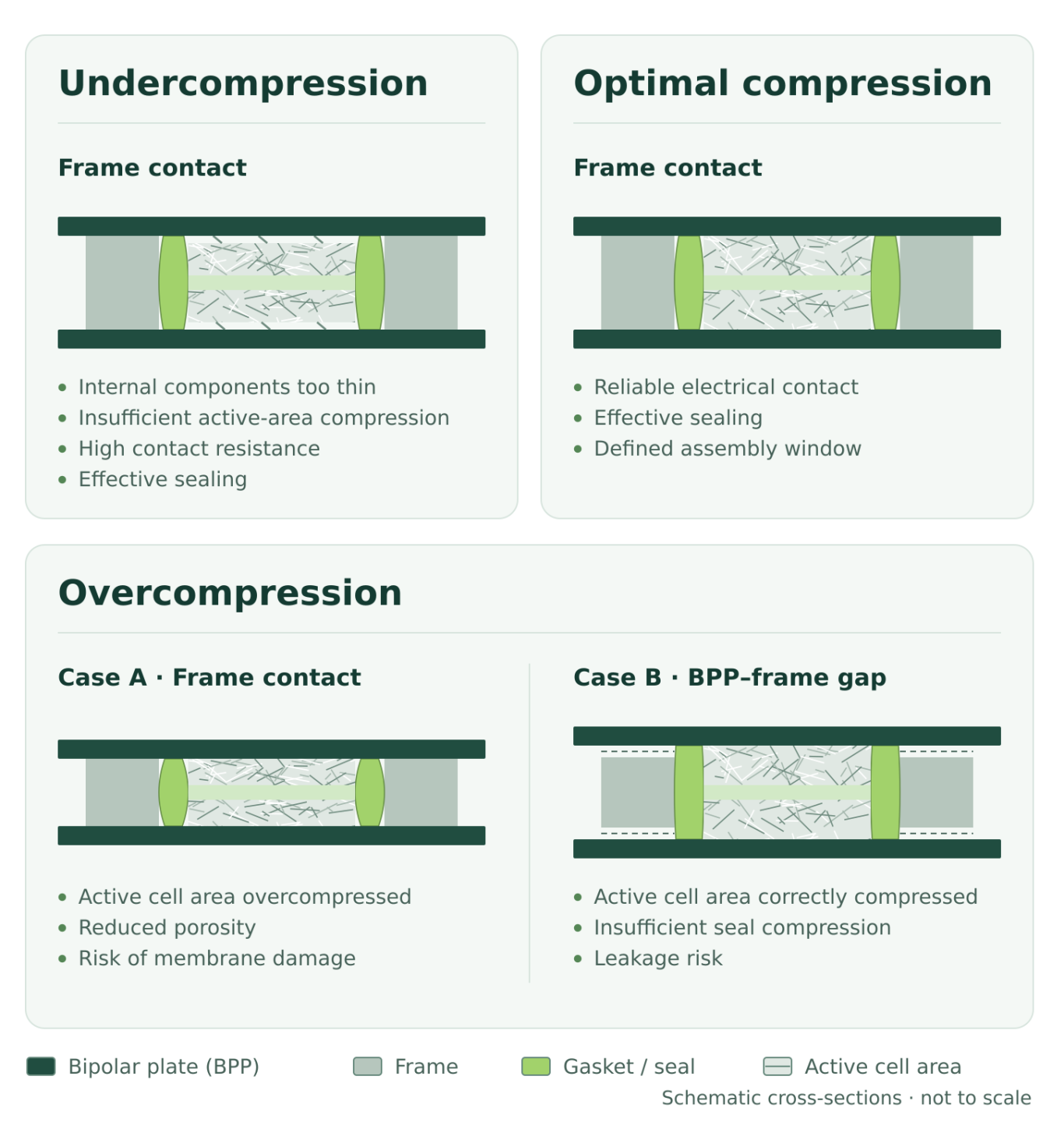
Insufficient compression can lead to a loss of electrical contact across the active cell area, increasing electrical resistance and reducing cell performance.
At the same time, insufficient gasket compression may cause leakage, while excessive compression can damage internal cell components.
Achieving the right balance requires precise knowledge of the elastic and plastic deformation behavior of all cell components and how they interact under compression. This is where experimental material characterization becomes essential
High-Precision Compression Testing Setup
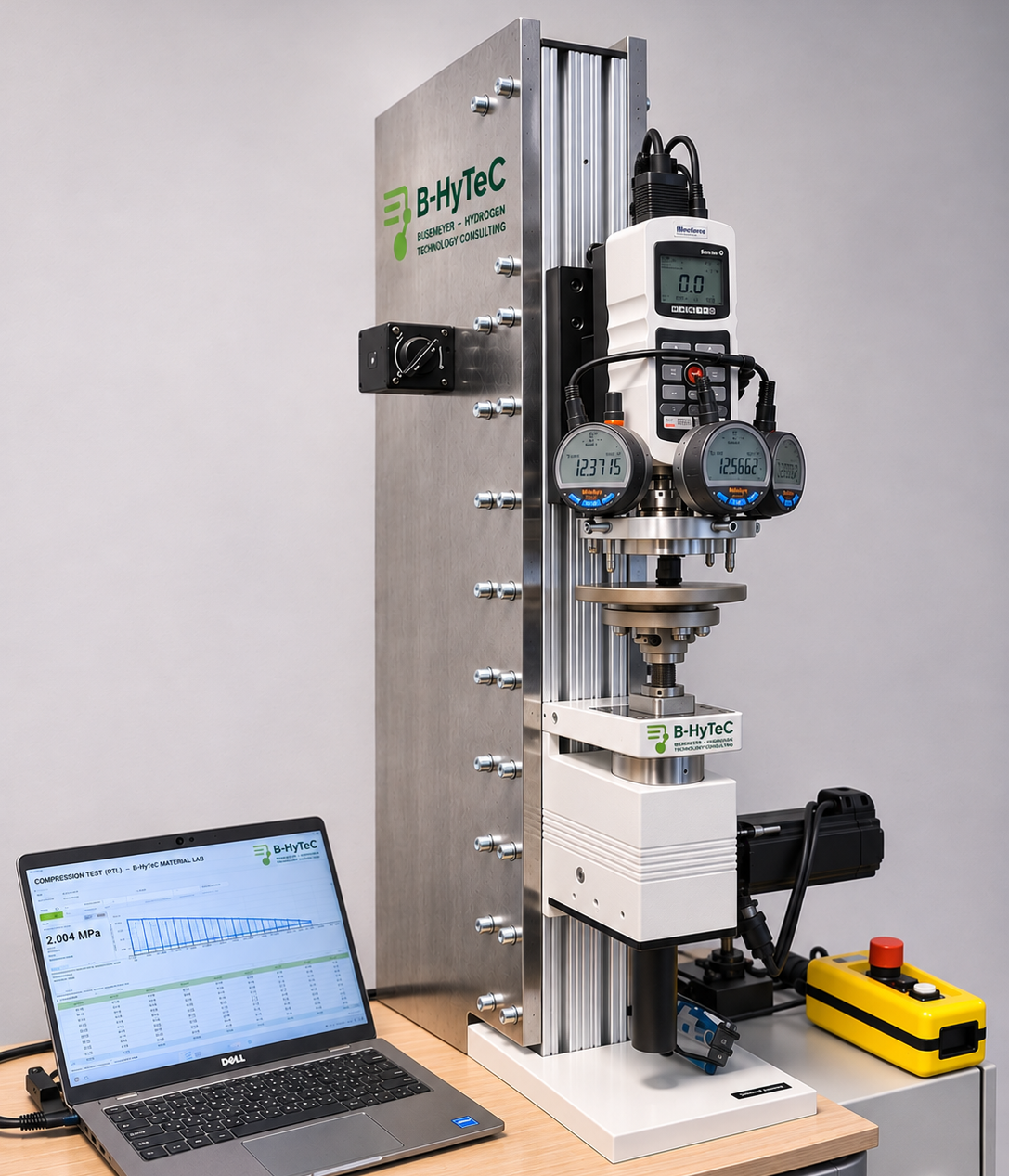
To complement our engineering and consulting services, B-HyTeC has developed a dedicated, fully automated compression testing system for the precise mechanical characterization of materials and cell components.
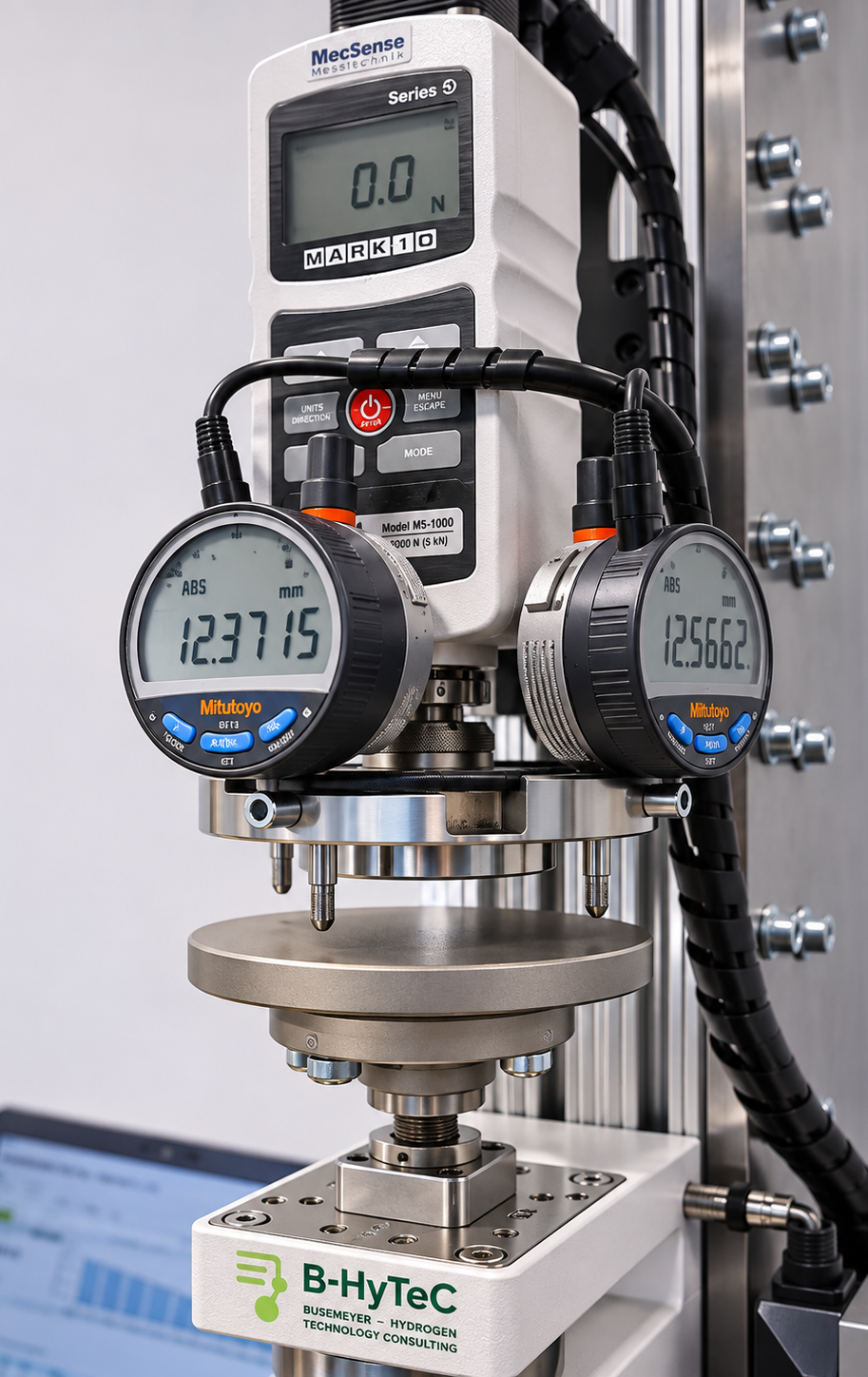
The system combines accurate force control with three independent high-resolution displacement sensors, allowing detailed analysis of material thickness, compressibility, and deformation behavior under defined loading conditions.
Key Testing Capabilities
- Compression force up to 4.3 kN – Automated force-controlled testing with adjustable loading, unloading, and holding sequences.
- High-resolution thickness measurement – Three independent Mitutoyo digital indicators with 0.5 µm resolution, enabling precise measurement of material deformation.
- Three-point displacement measurement – Simultaneous measurement at three positions to monitor parallelism and identify uneven compression.
- Validated measurement setup – Regular alignment and thickness validation using precision gauge blocks, with defined acceptance criterion for mean thickness deviation.
- Elastic and plastic deformation – Quantification of total, recoverable, and permanent deformation during compression and unloading.
- Pressure-dependent material thickness – Characterization of material thickness and compressibility as a function of applied pressure.
- Automated testing procedures – Reproducible loading sequences, defined stabilization periods, and continuous data acquisition.
- Customized testing and data analysis – Adaptable test procedures, detailed compression curves, and evaluation of material-specific mechanical behavior.
From Material Testing to Optimized Stack Design
More than testing – combining experimental data with engineering expertise.
With over 10 years of industrial experience in electrolysis and fuel cell stack development, B-HyTeC offers more than standardized material characterization.
Whether testing according to customer specifications or developing an individual testing approach, we combine in-depth knowledge of cell and stack design with experimental material characterization.
We support our customers throughout the entire process – from identifying the relevant mechanical properties and defining suitable testing procedures to interpreting the results and translating them into practical engineering recommendations.
Our goal is not simply to provide measurement data, but to understand the interaction of cell components and identify opportunities to improve performance, reliability, and durability.
Our Approach
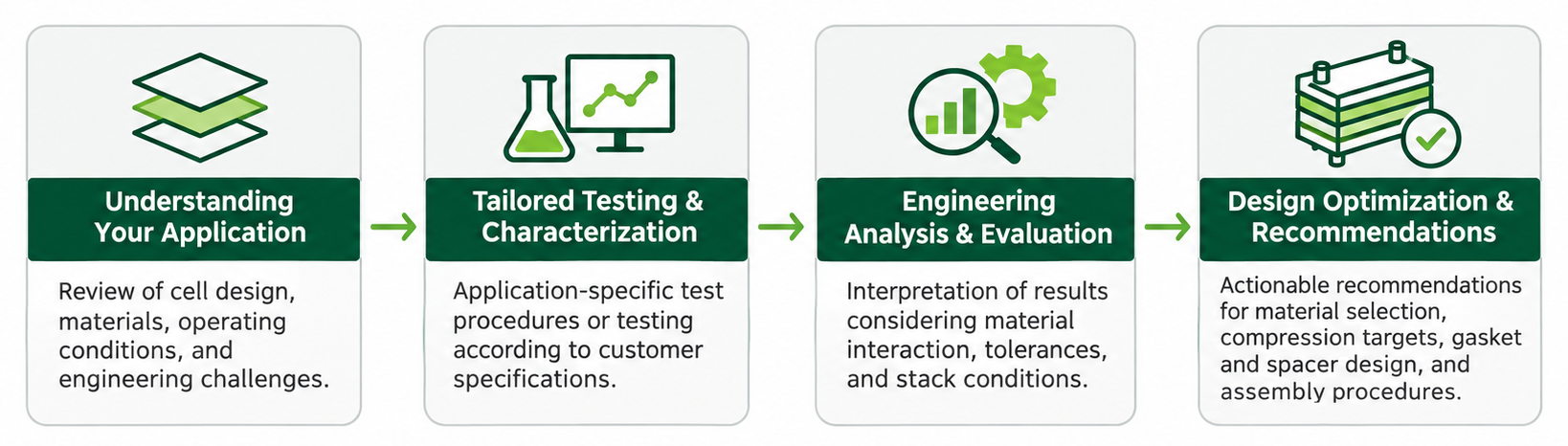
1. Understanding Your Application
Review of cell design, materials, operating conditions, and specific engineering challenges.
2. Tailored Testing & Characterization
Development of application-specific testing procedures or execution of tests according to customer specifications.
3. Engineering Analysis & Evaluation
Detailed interpretation of the results, considering material interactions, mechanical tolerances, and stack operating conditions.
4. Design Optimization & Recommendations
Actionable recommendations for material selection, gasket and spacer dimensioning, target compression levels, and stack assembly procedures.
Looking for support beyond material testing?
Explore our Technical Consulting Services or contact us to discuss your specific engineering challenges.